
Understanding Adolescent Self-Harm: A Guide for Parents
Navigating the teenage years is often like walking a tightrope in a windstorm. When parents discover that their teen is engaging in self-harm — the natural instinct is often panic.
However, understanding the "why" behind the behavior is the first step toward healing. Here is what the clinical research tells us about why this happens and how you can help.
What Is Adolescent Self-Harm?
Self-harm, clinically referred to as non-suicidal self-injury (NSSI), involves deliberate behaviors that cause physical harm to oneself without suicidal intent. Despite this distinction, it is a serious psychiatric concern and a strong predictor of future mental health risk.
Common Forms of Self-Harm in Teens:
Cutting (most common)
Burning
Skin picking or scratching
Hitting or self-bruising
Why Do They Do It? The Psychology of "Feeling"
According to the Diagnostic and Statistical Manual of Mental Disorders (DSM-5) and literature from the American Academy of Child and Adolescent Psychiatry (AACAP), NSSI is rarely about "attention-seeking." Instead, it is primarily a maladaptive emotion regulation strategy.
Emotional Regulation: For many teens, physical pain acts as a "circuit breaker" for intense emotional overwhelm. It can provide a momentary sense of calm or a release of built-up tension.
Turning the Invisible Visible: Adolescents often struggle to articulate psychological pain. Physical marks serve as a tangible manifestation of their internal distress.
Combatting Numbness: In cases of severe depression or dissociation, some teens use self-injury to "feel something" and reconnect with their bodies.
Why Parents Should Stay Calm
It sounds counterintuitive, but freaking out can unintentionally make the situation worse. Here’s why a measured response is vital:
Lowering the Shame Spiral: Self-harm is often shrouded in intense guilt. A high-conflict or panicked reaction from a parent can increase the teen's stress, potentially leading to more self-harm to cope with that new layer of shame.
Maintaining the Connection: Your teen needs to know you are a safe harbor. If you react with anger or extreme fear, they may become more secretive to "protect" you or avoid your reaction.
It is Usually Not a Suicide Attempt: It is crucial to distinguish between NSSI and a suicide attempt. While NSSI is a risk factor that requires professional attention, the immediate intent is usually to survive the moment, not to end life.
Helpful Tips to Combat NSSI
Addressing self-harm requires a blend of professional support and "at-home" replacement skills.
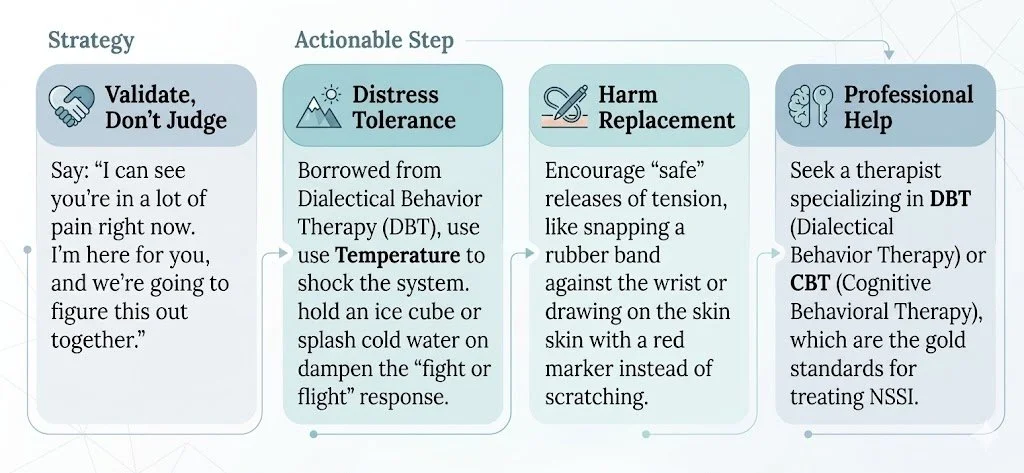
Discovering self-harm is a heavy burden, but it is a treatable behavior. By replacing judgment with curiosity and panic with a plan, you provide the stability your teen needs to learn healthier ways to cope.
Note: If you believe your child is in immediate danger or the injuries are severe, please contact emergency services or a crisis hotline immediately.
