
ADHD Is Not a Discipline Problem. Here Is What the Evidence Actually Shows
The Problem With How People Talk About ADHD
Most conversations about ADHD start wrong. They start with opinion instead of evidence. A parent hears "your child just needs more structure." An adult hears "everyone has trouble focusing sometimes." A teacher hears "we are overdiagnosing this."
None of those statements hold up under scrutiny. Brain imaging studies show measurable differences in structure and function in individuals with ADHD, particularly in regions governing executive function, attention regulation, and impulse control. Every major medical organization worldwide recognizes ADHD as a neurodevelopmental condition. The science is not ambiguous.
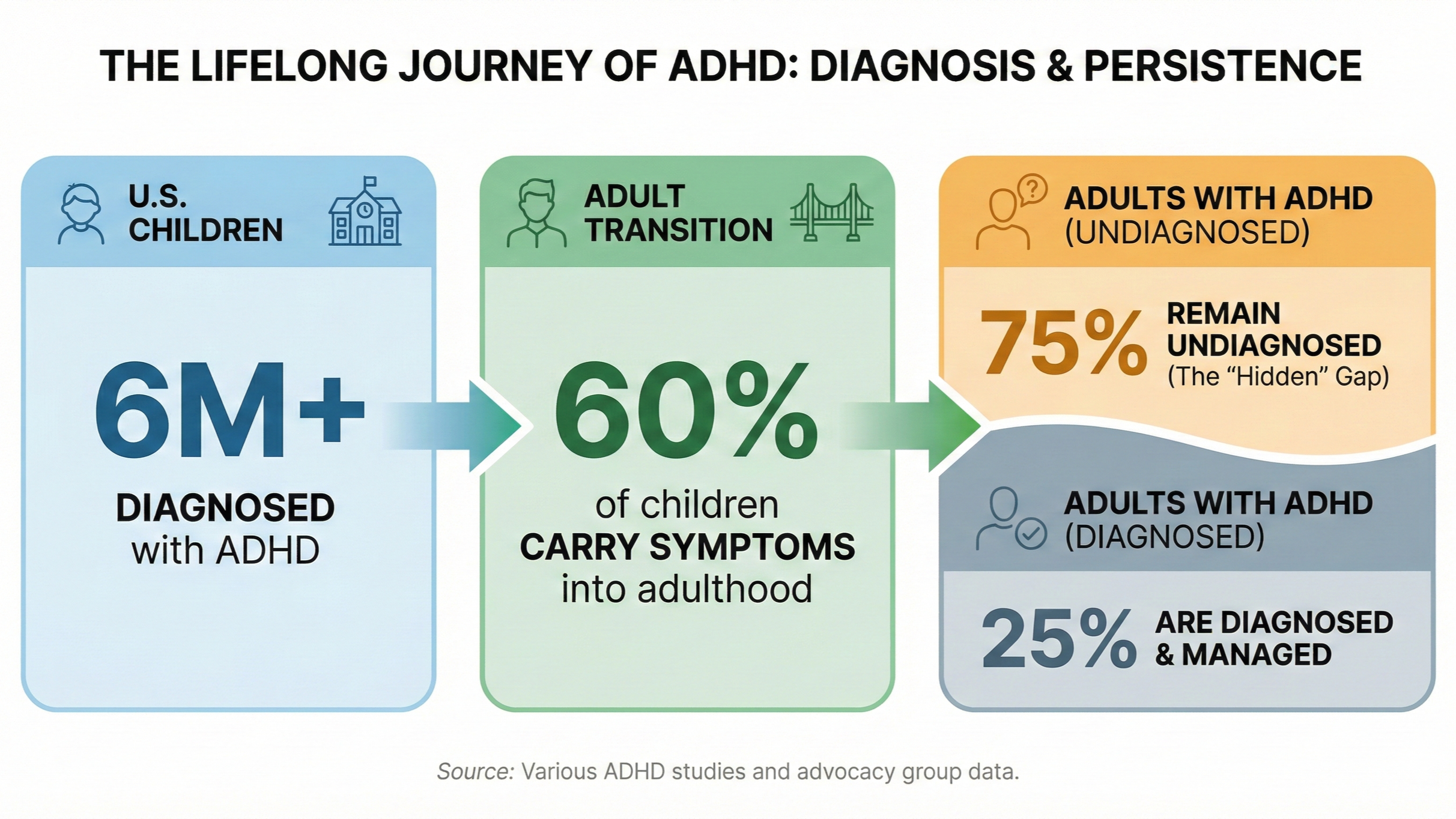
What is ambiguous is the public conversation. That gap between evidence and perception causes real harm: delayed diagnosis, unnecessary stigma, and years of struggling without understanding why.
Five Claims That Do Not Survive the Evidence
Myth vs. Evidence
Each claim below is commonly repeated. None are supported by current psychiatric research.
"ADHD is not real. It is a discipline problem."
ADHD is documented across decades of peer-reviewed research. It is neurological, not behavioral. Telling someone with ADHD to try harder is equivalent to telling someone with impaired vision to look harder. The mechanism is different. The intervention must be different.
"Children grow out of it."
Approximately 60% of children with ADHD continue to experience clinically significant symptoms into adulthood. Many adults receive their first diagnosis in their 30s or 40s, after years of unexplained difficulty with focus, organization, and emotional regulation.
"ADHD is overdiagnosed."
The data suggests the opposite. ADHD remains underdiagnosed in women, adults, and people of color. Increased awareness is not overdiagnosis. It means more people are finally getting accurate evaluation.
"Medication is the only option."
Medication is one component. Effective ADHD treatment combines medication management with behavioral strategies, organizational skills training, lifestyle modification, and collaboration with schools and families. The approach should be tailored, not standardized.
"Everyone has a little ADHD."
